
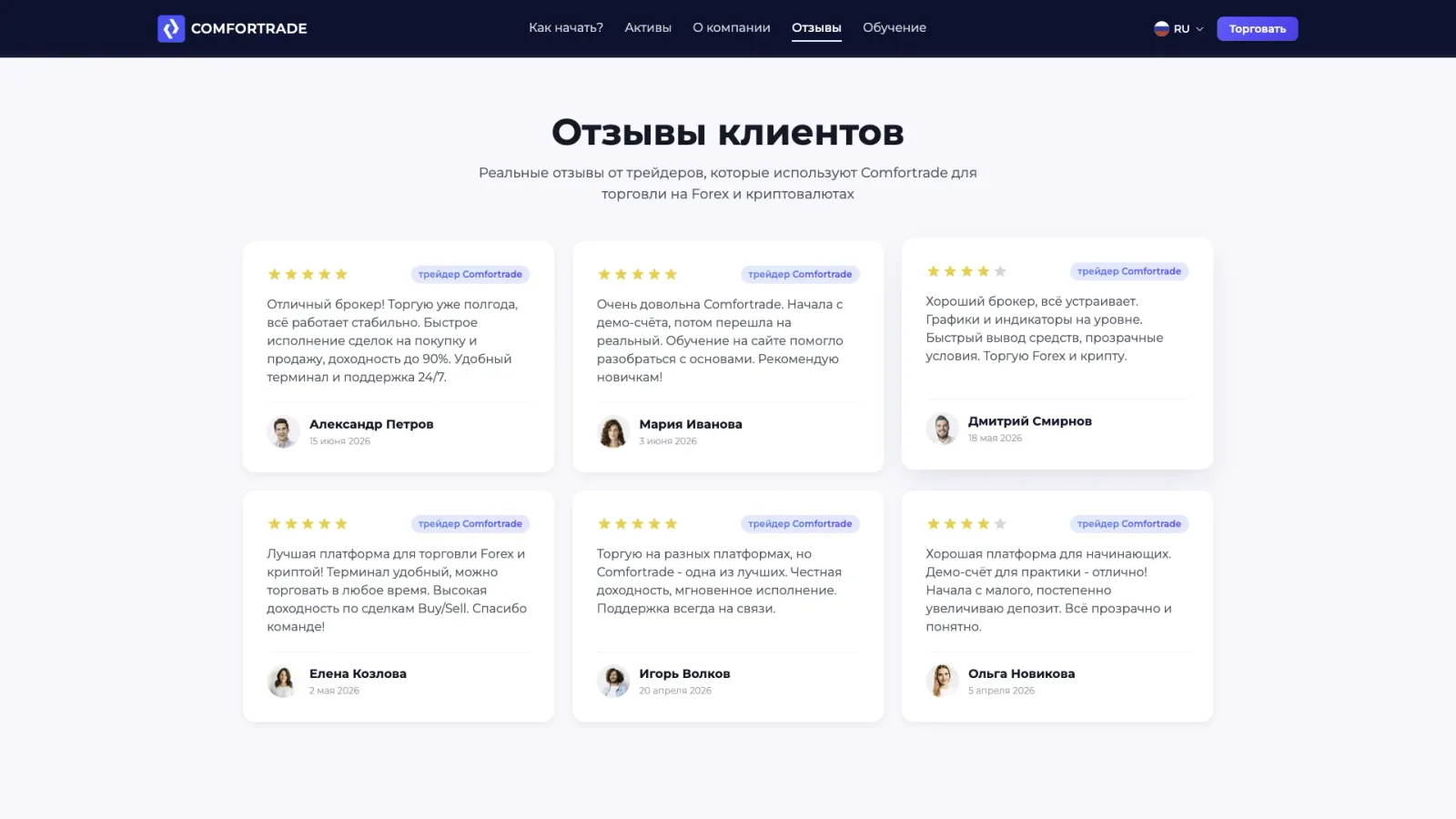
This is a personal column, not a 36Signal editorial review - I’m telling this story in my own voice, even though it’s published on our site. If you want the dry facts without the drama, we have a separate, detailed breakdown of Comfortrade’s registration with a step-by-step verification guide - links below.
How I even ran into this
Before opening an account with any broker, I have a habit of googling the name plus the word “scam” or “reviews.” I did the same with Comfortrade - and the very first results made me close my account dashboard and not open it again for three days.
Site number one: a London office that doesn’t exist
The first article was written confidently and in detail: Comfortrade supposedly has a London office, its jurisdiction is Saint Vincent and the Grenadines or the Marshall Islands, and the trading terminal is entirely controlled by an administrator by hand. Then came four “testimonials” from different people, each with the exact same story: a small deposit, quick “profit,” then a sudden fee at withdrawal - first 15%, then 20%, then 30%.
The problem is that Comfortrade’s actual Client Agreement - a document I read myself - names a completely different jurisdiction: Comfortrade Ltd, IBC No. 2026-00163, Saint Lucia. No Saint Vincent, no Marshall Islands, no London office anywhere in it. Either the author never read the document they claimed to be exposing, or the text was a copy-paste template with no real connection to this specific company.
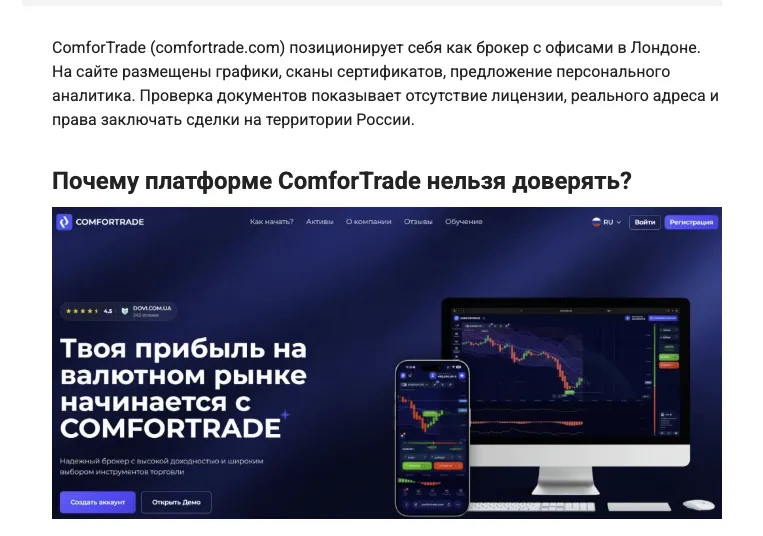
And then I noticed something even more telling: at the bottom of the article was a “you might also like” block with identically structured headlines about other companies. I opened a couple - the text was word for word the same, only the broker name changed. This isn’t investigative journalism; it’s a template with a company name slotted in.
Two more “exposés” - both leading to the same pocket
Further down the search results were two similar posts formatted as numbered emoji lists. One claims Comfortrade “appeared in April 2026.” I had separately checked the domain via WHOIS for another piece - it shows, in black and white, a registration date of September 16, 2025. That’s a gap of almost half a year, and it’s not a small detail - it’s exactly the kind of thing that takes one click to verify, yet nobody did.
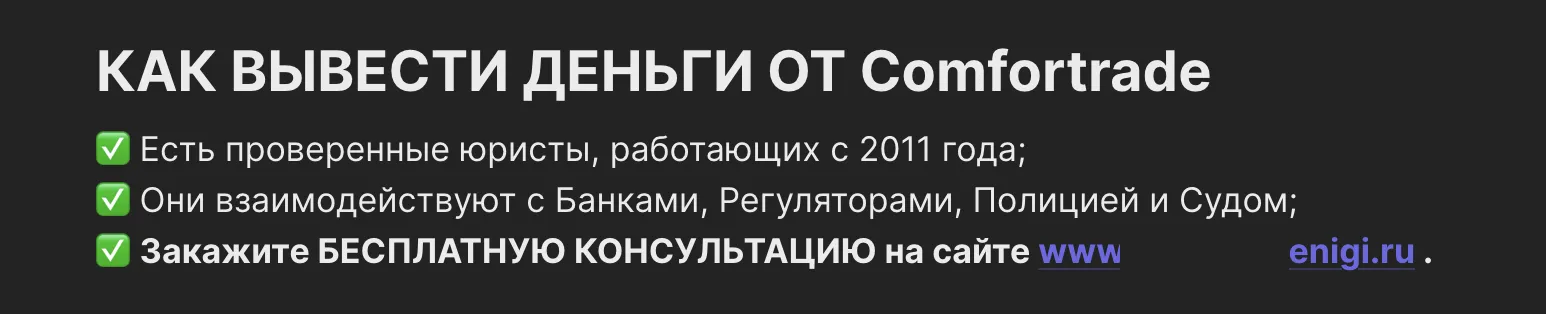
The second post is even shorter: five emoji bullet points, the same “fabricated profit → demand for extra payment” script, and a link to a site offering a free lawyer consultation. The first post pointed to one domain for that consultation, the second to a different one. Different addresses, the exact same playbook: scare first, then offer paid “help” recovering money the person may never have actually lost.
How this scam actually works
The scheme is called a “money recovery” scam, and it runs on the same loop regardless of which broker is named in the headline. A site publishes a scary article about a more or less randomly chosen company, promises victims a free legal consultation, and then the “lawyer” either asks for an upfront fee or requests personal data and banking details “to file a claim.” Someone who never lost a cent to Comfortrade risks losing money right there, at the “legal consultation.”
- The accusations are generic and would fit any broker: “no license,” “anonymous domain,” “fabricated quotes.”
- The article ends with a push toward a “free consultation” on a separate, unrelated domain.
- The specific details (jurisdiction, domain registration date, office address) don’t match the company’s own published documents.
- Near-identical template articles exist about other, completely unrelated companies.
- “Reviews” are anonymous, with no linked profiles and no way to verify the author even exists.
So what actually happens with withdrawals
Since all three articles insist in one voice that you can’t withdraw money from Comfortrade, I decided not to guess and just check. I put a modest amount into a real account - enough to test a withdrawal, not to get rich - and after a while requested a withdrawal back to the same card I had used to deposit.
Nobody asked me to pay an “insurance fee,” a conversion commission, or a “non-resident income tax” - exactly the kind of charges described so vividly in the “reviews” on one of the exposé sites. The request showed up in the “Wallet” section with its own ID and status, and the money arrived even faster than the 2-business-day window stated in the Payment Policy.
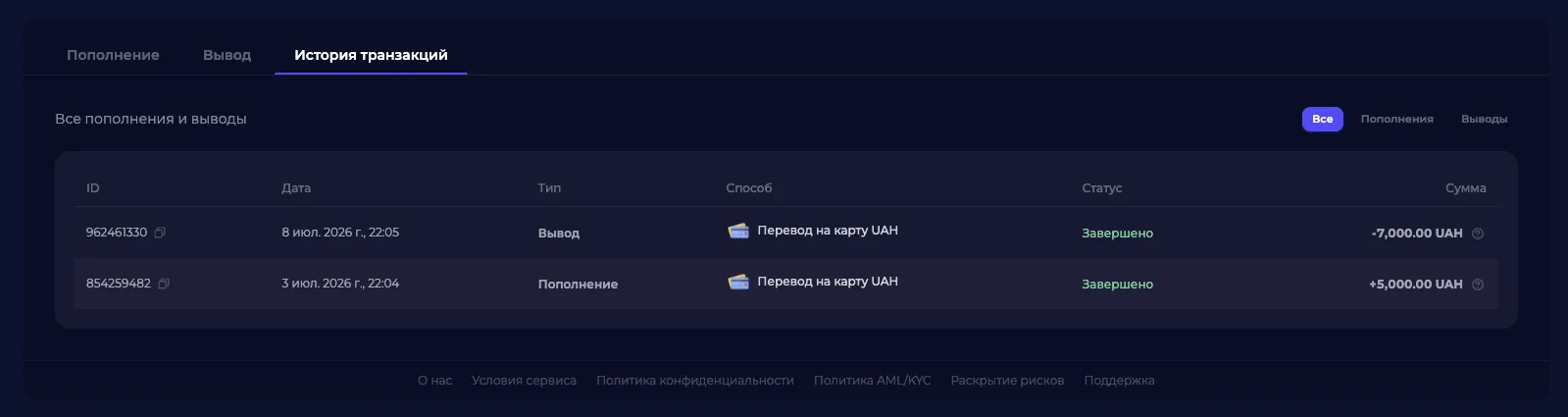
This doesn’t mean nobody ever has withdrawal problems - one tested transfer doesn’t change the fact that you should keep an eye on your own transactions and never put in more than you can afford to lose. But the specific script of “show a profit, then demand a 20-30% fee to withdraw it,” repeated word for word in fake reviews on three separate sites, is not something I ran into myself.
What I actually verified myself
Since I was already digging, I also checked what can be verified independently: Comfortrade Ltd’s registration in the Saint Lucia IBC registry, the domain’s age via WHOIS, and the actual text of the Client Agreement. All of that is broken down in a separate piece, including step-by-step instructions to repeat the check yourself instead of taking anyone’s word for it.
Full check of Comfortrade’s registration
Bottom line
None of this means Comfortrade is a flawless, risk-free service: like any young platform, it doesn’t hold a financial license in the conventional sense, and that’s worth keeping in mind. But the three specific “exposés” I found in search results turned out not to be journalism at all - they were a templated funnel toward paid “money recovery lawyers,” a scheme that latches onto any broker regardless of its actual reputation.
The takeaway is simple: if an article about a “broker scam” ends with a button for a “free lawyer consultation” on some unrelated domain, that’s not an investigation - it’s the exact same scam, just one step further down the line. Check the jurisdiction and the registration date yourself; it takes five minutes.